


OEM vs ODM vs OBM A Complete Guide for Hair Care Brands
OEM vs ODM vs OBM A Complete Guide for Hair Care Brands

If you are launching or scaling a hair care brand in 2026, one decision determines everything that comes next: which manufacturing model do you use? This OEM vs ODM vs OBM guide breaks down the three models side by side so you can pick the one that matches your budget, timeline, and brand vision. As a Is Argan Oil Good for Hair? Discover the Benefits for Hair and Skin, we have produced for all three models at our Guangzhou facility, and we see founders succeed and fail with each one.
What Do OEM, ODM, and OBM Mean in the Hair Care Industry?

The three acronyms describe who owns what during the product development process. Understanding the difference is the first step before you contact any OEM manufacturer.
- OEM (Original Equipment Manufacturer): You provide the formula. The factory fills bottles with your recipe. You own 100% of the formulation IP.
- ODM (Original Design Manufacturer): The factory provides a ready-made formula from its catalog. You customize packaging, fragrance, and branding. Faster, cheaper, but the formula is shared with other buyers.
- OBM (Original Brand Manufacturer): The factory builds the product under your brand name and transfers full IP rights to you. You walk away with an exclusive formulation you own outright.
Each model maps to a different stage of brand maturity. A first-time founder with a USD 5,000 budget and a 90-day launch window will rarely choose the same model as a CPG company extending a USD 5M retail line. Karseell Private Label Hair Care Shampoo and Conditioner – Promotes Healthy Scalp and Hair-OEM And ODM Services Available shows the launch-timeline side of this decision in detail.
OEM vs ODM vs OBM: Side-by-Side Comparison

Below is the matrix our account managers use when qualifying new buyers. The numbers are typical for the Chinese OEM hair care market in 2026, not universal.
| Factor | OEM | ODM | OBM |
|---|---|---|---|
| Formula IP | You own 100% | Shared (factory also uses) | You own exclusively |
| Development time | 8-12 weeks | 2-4 weeks | 10-16 weeks |
| Typical MOQ | 3,000-10,000 units | 500-3,000 units | 5,000-20,000 units |
| Per-unit cost (relative) | High | Lowest | Highest |
| Formulation fee | USD 2,000-10,000 | USD 0-500 | USD 5,000-20,000 |
| Best for | Mature brands with R&D | First-time founders | Premium / niche brands |
When Should a Startup Brand Choose OBM?
OBM works best when three conditions line up: you have at least USD 15,000-25,000 in initial capital, you have a clear hero SKU concept (e.g., "vegan keratin bond builder"), and you plan to scale into multi-country distribution within 18 months. Under these conditions the higher upfront formulation fee pays back within the first production run because you own the formula outright. We discuss this trade-off more in Why Now is the Perfect Time to Partner with Karseell for Hair Care Products.
How Mid-Size Labels Benefit from ODM
If you are an existing salon chain or DTC brand with 3-5 SKUs already in market, ODM lets you expand the line quickly without expanding your in-house lab. Many private label hair care brands actually start with ODM to test 12-15 SKU variants, then convert the winners into OEM formulas after market validation.
When Does OEM Make the Most Sense?
OEM is the right call when you already have a chemist on staff or a signed formulation from a third-party lab. At that point you want a factory that can scale production cleanly without changing your recipe between pilot and mass production. How to Maintain and Protect Your Keratin Bonded Hair Extensions explains how to verify a factory's batch-to-batch consistency.
How to Switch Between Models as Your Brand Grows
The model you start with does not have to be the model you stay with. A common path is ODM (year 1) → OEM (year 2-3) → OBM (year 4+). At each switch you negotiate the IP transfer as part of the next contract. We see this progression in roughly 40% of our repeat buyers.

Common Mistakes Buyers Make in the OEM/ODM/OBM Choice
- Choosing ODM when they needed OEM — discovering after launch that the factory sells the same formula to 8 other buyers.
- Choosing OEM too early — spending USD 8,000 on a custom formula before validating demand.
- Choosing OBM on price alone — not budgeting for the regulatory reformulation when entering the EU market.
Which treatment is best for hair? lists the seven questions you should ask any factory before signing. Will goat milk make your hair grow back? covers the contract terms that protect your IP once you commit.
How Karseell Factory Supports All Three Models
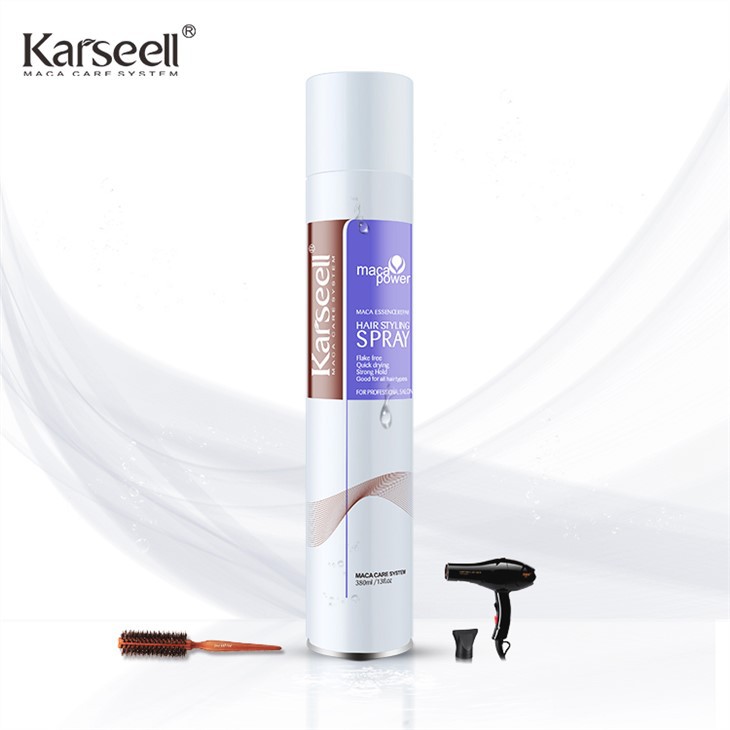
Since 2005 Karseell Factory in Guangzhou has produced under all three models for buyers in 130+ countries. We have an 18-person R&D team for OBM development, a 240-formula ODM catalog, and dedicated OEM lines with batch-level COA. The same QC system applies regardless of the model you choose. Reach out at manager@karseell.com for a model-fit consultation.
FAQ: OEM vs ODM vs OBM in Hair Care
Which is cheapest: OEM, ODM, or OBM?
ODM is cheapest per unit because you share the formulation cost with other buyers. OEM has higher unit cost but lower risk of formula conflict. OBM is the most expensive but you own the formula exclusively.
Can I switch from ODM to OEM later?
Yes. Most factories allow you to upgrade an ODM catalog formula into a customized OEM formula at the next reorder, often for a USD 3,000-5,000 reformulation fee.
Do OBM products come with formulation IP transfer?
In a true OBM contract, yes — the factory assigns all formulation rights to your brand. Make sure the contract explicitly states "assignment of formulation IP" not just "exclusive supply".
What MOQ does each model typically require?
ODM: 500-3,000 units. OEM: 3,000-10,000 units. OBM: 5,000-20,000 units. Some factories accept 200-unit ODM trial orders for first-time buyers.
How long does ODM development take?
Standard ODM sampling is 7-15 working days from spec confirmation. Custom OEM development is 8-12 weeks including stability testing.
Is private label the same as OBM?
No. Private label typically refers to ODM with your label. OBM is a deeper relationship where you own the formula outright.
Article last updated: 2026-09-21 | Author: Karseell Editorial Team | Reviewed by: Guangzhou Chinchy Cosmetic Group R&D
